

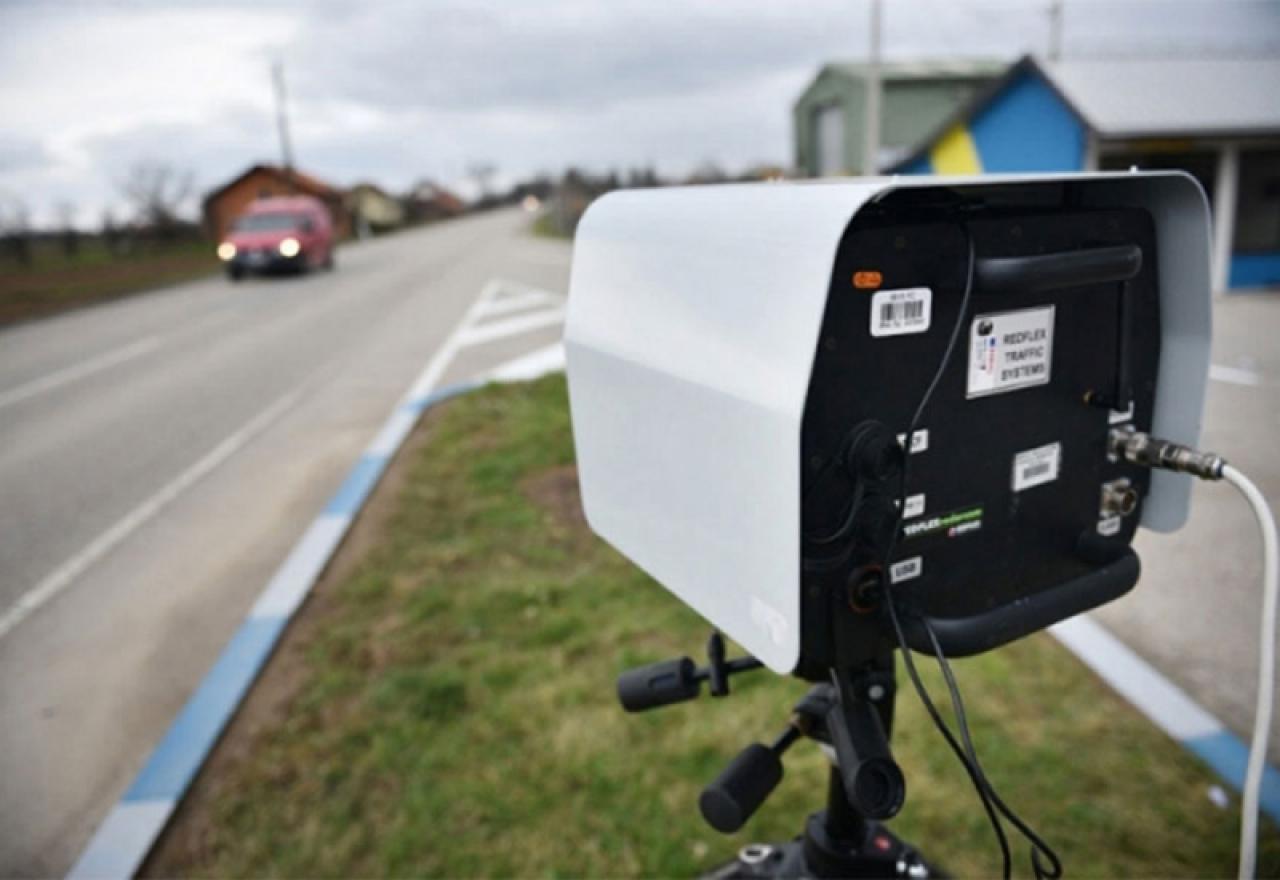
BANJALUKA – The Republika Srpska (RS) Ministry of Interior has announced a tender worth 35 million BAM (approximately 18 million €) to buy radar devices. With this procurement, RS Interior Ministry favours only one company, which is restricting competition and practically fixing this multimillion contract.
According to our sources and information obtained by CAPITAL, this radar devices procurement, which are several times more expensive than similar products available on the market, favours the Banja Luka-based company MMS CODE, which in 2019 already received over ten million BAM (approximately 5 million €) from the Interior Ministry for the purchase of radar systems.
Tender announced by outgoing minister in a caretaker capacity
It is interesting that the tender was announced by the former Minister of Interior, Siniša Karan, while he was serving in a caretaker capacity. He issued the tender for the procurement of an additional 110 radar devices worth 35 million BAM on August 25, after the then-Prime Minister of Republika Srpska, Radovan Višković, had submitted his resignation, but before the new government was formed and Željko Budimir took over the Ministry of Interior.
In a request for clarification of the tender documentation sent to the Ministry by the Novi Sad-based company Telix, it is stated that the tender documentation specifies only one measurement technology LiDAR which effectively excludes all other potential bidders who use radar-based speed measurement technology.
Although the Ministry denies this and claims that “there are several manufacturers whose products use the mentioned speed detection technology, and therefore no company is being favoured,” the extensive tender documentation and Telix’s objections clearly indicate otherwise.
“The minimum technical specifications have been defined for the new stationary radar devices procurement. A previously conducted comparative review of the technical characteristics of stationary radars available on the market shows that there are several manufacturers whose products use the mentioned detection technology, and thus no company is being favoured,” the Ministry stated in its response to Telix’s request for clarification of the tender documentation, as well as in its response to CAPITAL’s inquiries.
The Ministry is not being wrong when it says that “there are several manufacturers whose products use the mentioned detection technology, and therefore no company is being favoured.” The fact is that there are indeed several manufacturers, and in that sense no company is directly favoured, but the favouritism occurs in a different, more subtle way.
Only one company has a type approval certificate from the Metrology Institute
Namely, the tender documentation states that “before commissioning, it is necessary to verify the radar device by an authorized institution”, and the only company that has a type approval from the Bosnia and Herzegovina’s (BiH) Metrology Institute for the verification of the requested devices is, you guessed it – MMS CODE.
When asked how the Interior Ministry plans to ensure mandatory verification before commissioning the LiDAR device, they said that the costs of the first verification are borne by the supplier, and that “this represents part of the risk that the supplier assumes under the threat of contract termination and the consequences that follow the termination”.
This practically means that suppliers, who do not have a type approval certificate from the BiH Metrology Institute and are unable to provide the first verification, risk the consequences of contract termination if they apply and win the tender.
Furthermore, when asked whether the tender documentation excludes all bidders whose measuring instruments use radar technology and who already have completed verifications and approvals in BiH, the Interior Ministry said that “all bidders who meet the minimum technical requirements specified in the tender documentation have the opportunity to submit their bids regardless of whether they already have type approvals for measuring instruments and verifications or are about to receive them.”
What is particularly interesting is that MMS CODE received type approval for a measuring instrument manufactured by the German company Vitronic, which fully meets the conditions prescribed by the tender, on October 1 of this year. Given that the tender was announced on August 25 and that “bidders have the opportunity to submit their bids regardless of whether they already have type approvals for measuring instruments and verifications or are yet to receive them”, it is reasonable to suspect that those who created the tender documentation and announced the tender knew that MMS CODE had already submitted a request to the BiH Metrology Institute for type approval to complete Vitronic devices verification.
Ultimately, there is a simple question as to why the RS Interior Ministry decided to allocate as much as 35 million BAM for the procurement of 110 radar devices when in 2019 it allocated “only” ten million BAM for the procurement of radar devices of a different type. For that money, instead of the 110 LiDAR devices required by the new tender, more than 300 radars that were purchased in 2019 could have been purchased.
Traljić: We have seen the same pattern many times in tenders worth millions
Srđan Traljić from Transparency International BiH says that we have seen previously the same pattern many times in tenders worth millions, as well as the situation where tender documentation is created in such a way that only one bidder can complete it.
“Unfortunately, we do not have a system that can protect the public interest in such cases before damage to the public interest occurs. So, if another dissatisfied bidder does not stop it with an appeal, it will pass, and no one will protect the public interest,” says Traljić.
According to the Public Procurement Agency of BiH data, he continues, an average of 1.49 acceptable bids were received for all tenders, which is devastating, emphasizing that this number is even lower if we look at tenders of higher value.
“Their report also notes that technical specifications in numerous cases may indicate favoritism towards certain bidders and restricting competition, but we do not have a systemic solution to stop this problem. The result is that lucrative contracts are awarded to the same companies, which the public often associates with the same people from the political leadership, but everything ends without consequences or sanctions,” says Traljić.
He finally points out that a new law is needed, which was emphasized a long time ago, as a part of the European integration process, and that a few years ago we only received amendments that opened additional space for corruption with almost none of the systemic shortcomings being eliminated.