


BANJALUKA – Public companies, institutions, and organizations in Republika Srpska are rigging tenders for construction works by requesting unnecessary certificates from bidders, that only those they want for the job possess, CAPITAL reveals.
To make things worse, those certificates have nothing to do with construction or craft work, so it is clear they are required only to disqualify bidders who do not possess them.
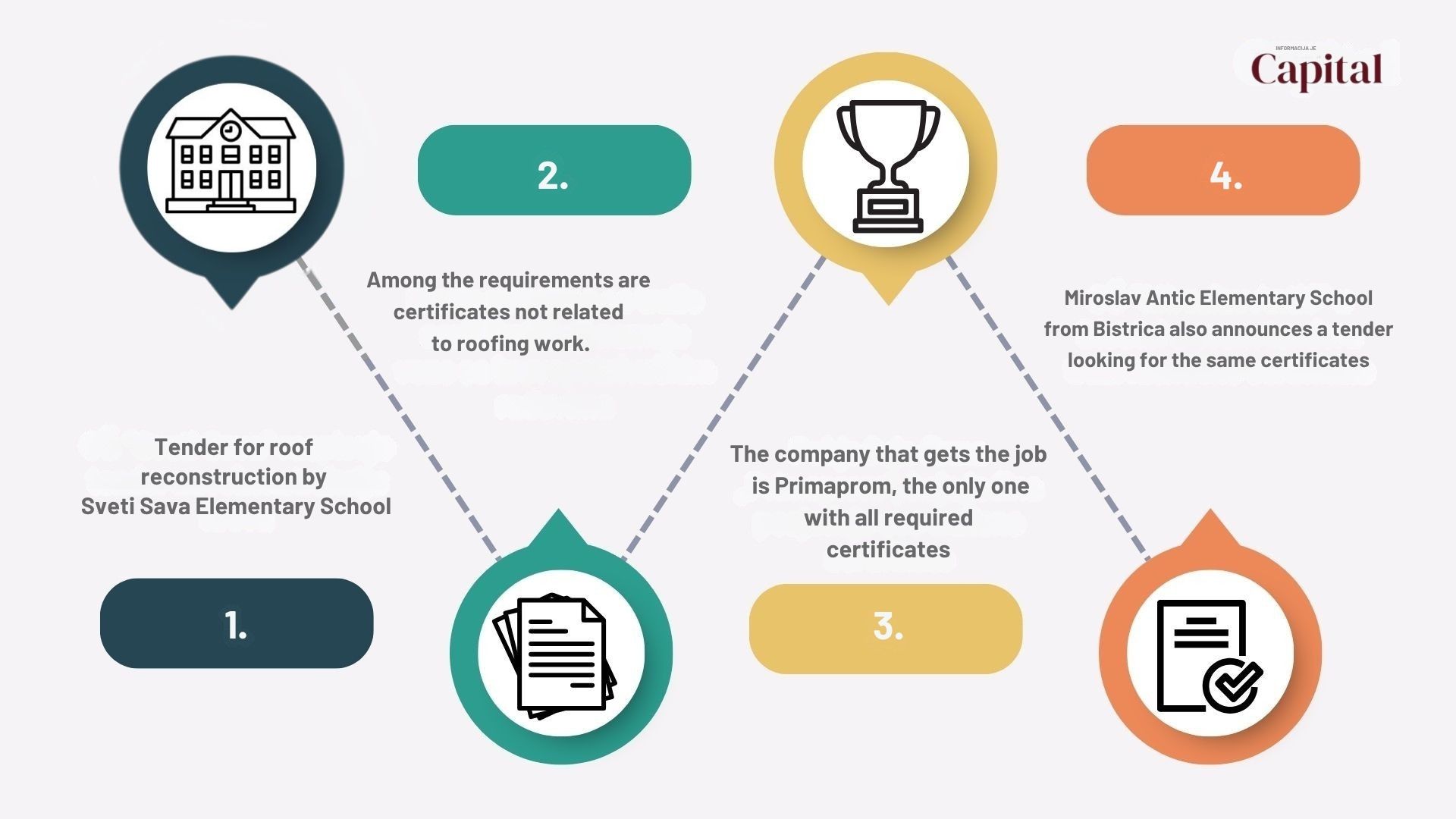
This new way of tender rigging, i.e. for disqualifying unwanted bidders and selecting wanted ones, was introduced by the Sveti Sava Elementary School in Banja Luka.
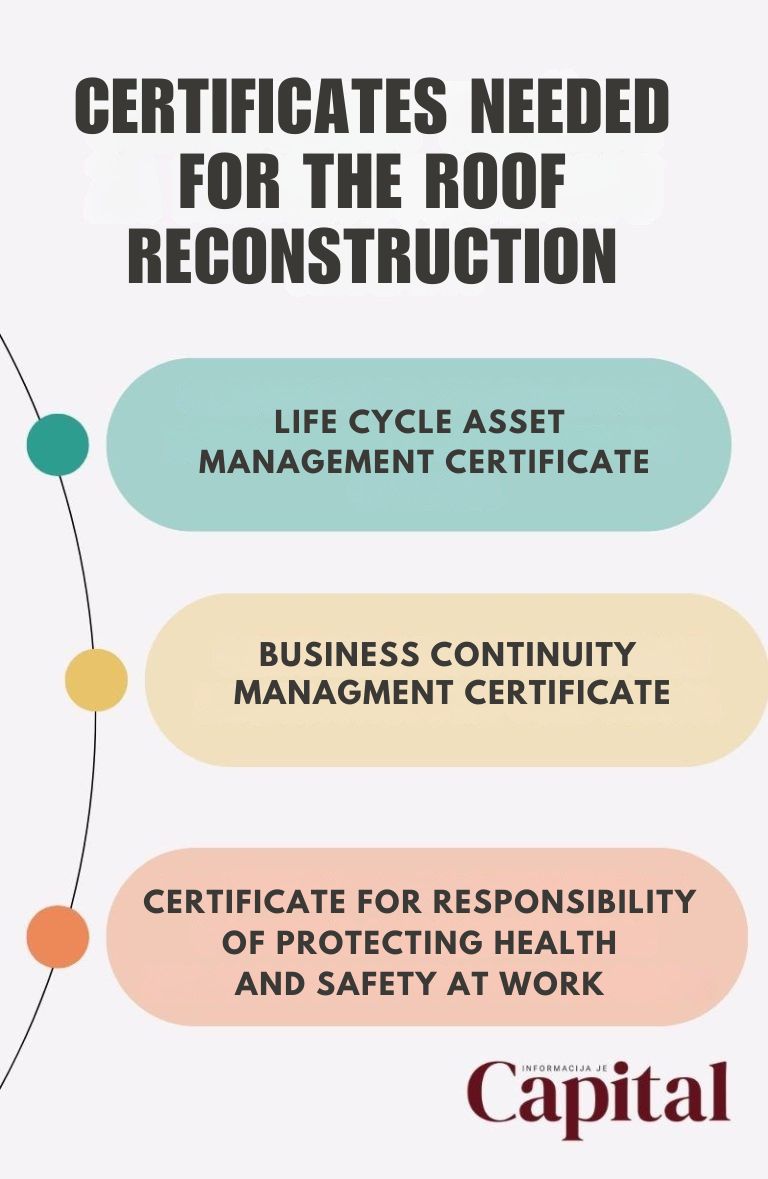
When announcing a tender for a roof reconstruction, this school requested certificates for life cycle asset management, business continuity management, and a certificate for protecting health and security at work.
The company from Banja Luka called Primaprom got the job. It is stated on their website that it is “a renowned company that does printing, graphic designing, covers and distribution of stationery.” It turned out that only this company had all required certificates, so they got the job worth 51.100 BAM (around 26.000 €).
The principal of the Sveti Sava Elementary School, Miroslav Popržen, says it was a last year tender, and he really does not remember the details, but that the school secretary, who took care of it, told him no one complained about the tender.
“I'm not at school right now, but I'm stunned that someone is claiming something was not in accordance with the law, yet the tender was completed last year with no complaints. I really do not know the tender documentation details,” says Popržen.
Owners of several construction companies, who wished to remain anonymous, say that it is clear as a day that selected company was a favourite. They say it is well known tenders worth millions are rigged and emphasize that small companies are now being prevented to even bid tenders worth tens of thousands BAM.
“Why they requested all those certificates considering that the independent entrepreneurs will be doing the roof reconstruction or construction companies that absolutely do not need those certificates. What the life cycle asset management has to do with the roof reconstruction?“, our interlocutors ask.
After this tender was done and Primaprom got the job, as the only company with all requested certificates, our interlocutors say that others also started to put the same “filters” in their tender documentation.
“Miroslav Antic Elementary School from Bistrica announced a tender for roof reconstruction and stated identical conditions as the Sveti Sava Elementary School. They also look for certificates that have nothing to do with the roof job”, say out interlocutors.
They added that the Agency for intermediary, IT and financial services (APIF) also stated the same conditions for their tender for their branch office reconstruction in Gradiska, i.e. windows replacing, tiling, wall painting and similar work.
“The tender documentation requires a whole series of certificates and states that ‘their compatibility and equivalence will be assessed in a professional manner by the Commission for the Implementation of the Procedure’. Are the commission members competent to examine all certificates? How and what will they examine, when and in what way? What do they need from those certificates, what exact ‘procedures, policies and records’ and why do they need them,” say our interlocutors, adding that all their comments can also be found on the public procurement portal.
When it comes about APIF tender, our interlocutors ask why “set” is stated as a measuring unit.
“Why they didn´t state the quantity, but only the set? Does the bidder have to measure during the site visit, or should they just give an approximate bid? What is meant by ‘set’?” they ask.
Why the bidder must own 45001:2018 certificate, they continue to ask and pinpoint that it is a standard which defines requests considering responsibility for health and security protection at work.
“According to the Republika Srpska Law on Workplace Safety and Health, the minimum requirements are proscribed that an employer is obliged to meet in terms of workplace safety. Why they don´t require the Workplace Risk Assessment Act, which is a legal category, but they require this standard,” they ask.
They leave nothing to chance
To ensure that nothing was left to chance, the Sveti Sava Elementary School requested in its tender documentation that the certification body, which issues the listed certificates, must also possess a special certificate.
That means that two elements have been created to disqualify bidders and favour the eligible ones. The first is that you must possess certain certificates, and the second is that even if you have those certificates, they must have been issued by a certification body that must, again, be specially certified.
APIF Director Duško Milunović tells CAPITAL that he is not familiar with the tender details but points out that the official in charge of public procurement told him that there were no complaints about the tender, and that he was preparing a response to the remarks on the Public Procurement Portal.
“He informed me that he would publish the response to those remarks on the Public Procurement Portal tomorrow,” says Milunović.
Srđan Traljić from Transparency International BiH says that they have often encountered tenders tailored to the needs of certain bidders.
“We haven´t seen this specific case, but in the past, one of the most common ways of tailoring deals to individual companies was to set technical requirements in a way that only that bidder could meet,” says Traljić.
He points out that the Public Procurement Agency data states that an average of 1.49 acceptable bids were received for tenders in one year, which speaks volumes about this.
“So, certain bidders are favoured and if some dissatisfied bidder does not complain, and many do not want to resent the authorities, there are not many other mechanisms that could protect the public interest. The Public Procurement Agency can, upon a report, impose offense penalties of 300 to 3,000 BAM (around 150 to 1.500€) if there is a proof that the contracting authority adjusted the tender to a specific bidder, but I am afraid that such sanctions have not deterred anyone from breaking the law. That is why we have fewer bids because everyone is aware that many tenders are rigged,” concludes Traljić.